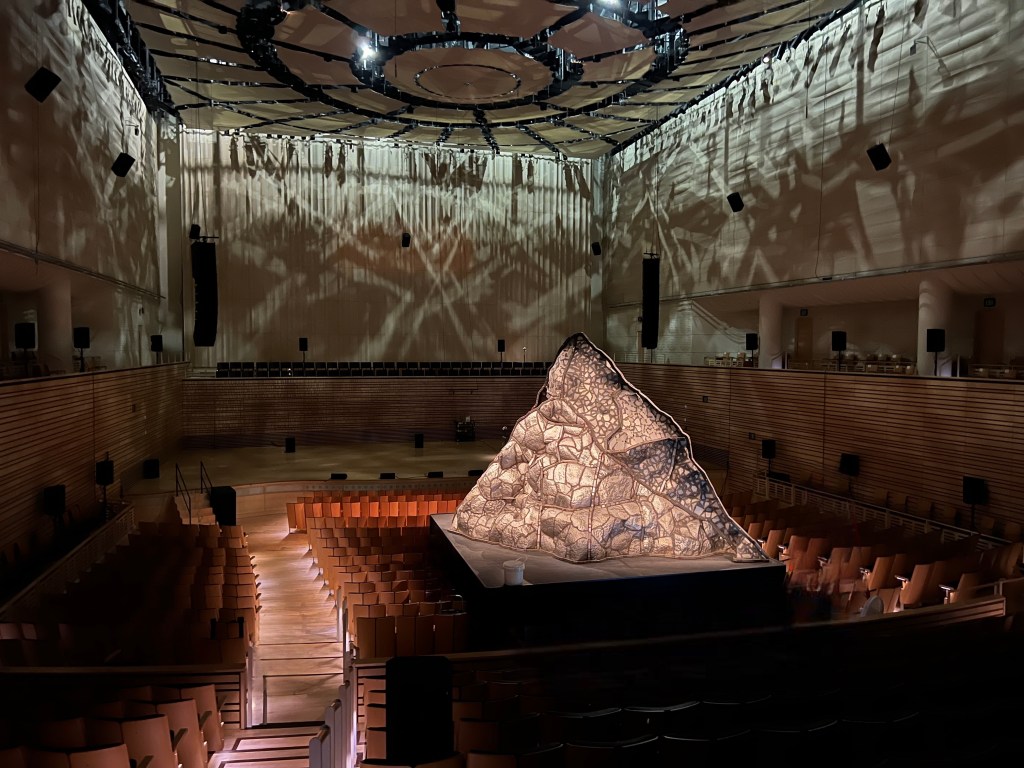
Ilopango, The Volcano that Left at Shifting Center
Experimental Media and Performing Art Center, Rensselaer Polytechnic Institute, Troy, NY
October 27 – November 18, 2023
Drawing its title from a term in the field of acoustics that describes the perceived dislocation in the position of a sound source, Shifting Center stages processes of listening to infrasonic landscapes, acoustic architectures, and unsounded instruments across multiple scales of time. The exhibition poses sculpture as time-based and presents it with moving-image and spatial-audio installations across the concert hall, proscenium stage, and studios at EMPAC.
In making its passage from a sculpture park to a performing arts center, Ilopango, the Volcano that Left proposes some questions: What does it mean to consider sculpture as time-based? And can it become a performance? In (re)enacting a refusal to remain an object transfixed in a landscape, it exposes the fact that sculptures always already carry time, and are the ultimate records of their own making. When we encounter a sculpture as an artwork in an exhibition space, how might we apprehend the histories, geographies, and processes that are latent within it?
With Ilopango, the Volcano that Left, Cortez attends to a popular account of the Terra Blanca Joven super eruption that took place in the mid-first millennium CE in what is now known as El Salvador. Imperceptible subterranean frequencies sounded before magma and rock were blasted thousands of miles into the stratosphere, reflecting light coming from the sun away from the earth to produce a yearlong winter that affected the ancient Maya civilization and regions beyond. Both geological feature and Indigenous deity, the volcano was dislocated from its site which was transformed into a large depression or caldera that is now the Ilopango Lake. As the volcano exploded into particles that dispersed in all directions, its ash was carried by the atmosphere to fall across the globe, and as far as Antarctica, where it can still be found embedded deep in the ice, a trace in the present or the continuing reverberation of a bygone weather event.
Centuries later, Cortez’s speculative sculpture performs both a reversal and an extension of this movement. Steel is a symbol of permanence but it is extracted from the earth. In building the volcano, the artist and her collaborators hand-beat out its industrialization, preparing the material for its return to its once organic state. Welded on the hill of Atelier Calder in Saché, France, the sculpture traversed the Atlantic Ocean to the artist’s studio in Los Angeles to be completed before making its way to the Hudson Valley, from where it will journey upriver to Troy and beyond. Cortez describes “the volcano that left” as an act of migration and considers its movements across land and water as a metaphor for the imperceivable yet continuous transformation of the landscape over time.
Shifting Center was curated by Vic Brooks and Nida Ghouse.
Photo courtesy of the artist.
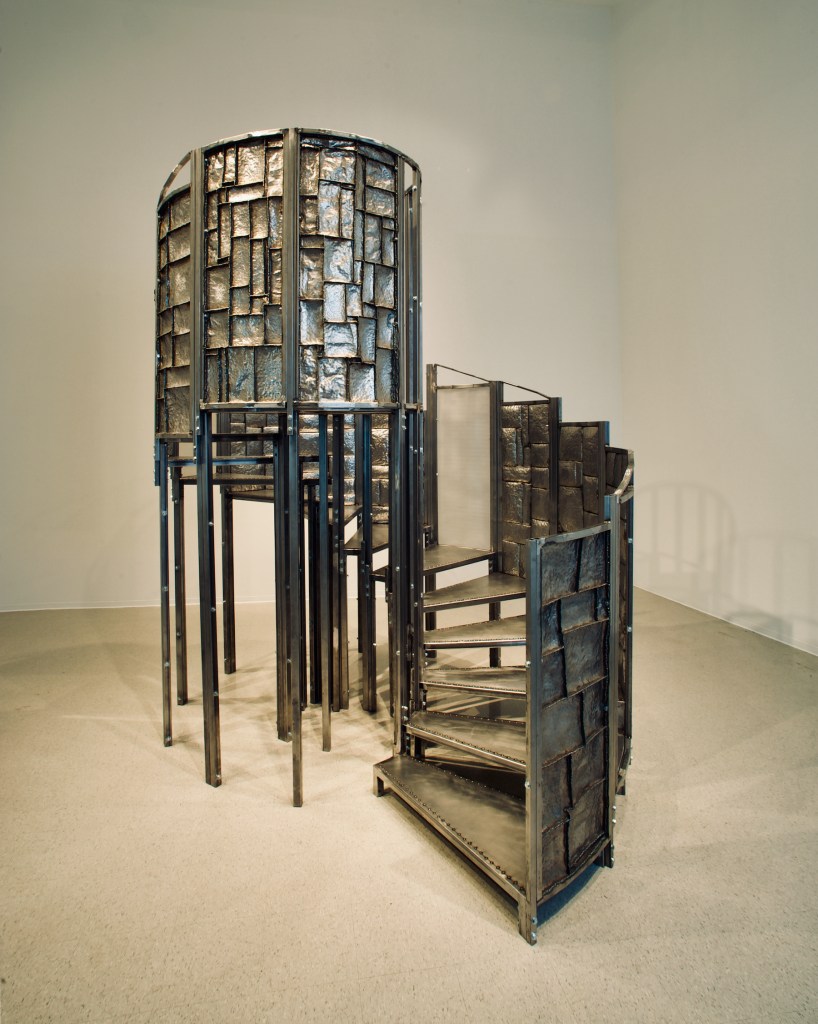
El Caracol
14th Shanghai Biennale: Cosmos Cinema
Power Station of Art
November 8, 2023 – March 31, 2024
El Caracol(2022) engages with the ancient Maya practice of observing the cosmos as a way of understanding time beyond the limits of a single human life. In its reimagination of Indigenous knowledges, cosmologies, and ritual practices, the work expresses the artist’s conviction that “gifts of generosity and messages of wisdom filled with intergenerational knowledge can circulate through spacetime and reach others.”
Its spiralling structure is inspired by an observatory built by the Maya at Chichen Itza. In Cortez’s homage to that ancient, abstract architectural form, a thirteen-step staircase leads to a platform from which visitors can contemplate the cosmos. The building, the name of which translates as “the snail,” was constructed according to Mayan astronomical charts and is believed to have served as the setting for cosmic ceremonies. In keeping with the original, the observatory functions as a symbolic portal from which to view and imagine other worlds.
The 14th Shanghai Biennale was curated by Anton Vidokle, Zairong Xiang, Hallie Ayres, Lukas Brasiskis, and Ben Eastham.
Photo courtesy of the artist and Commonwealth and Council, Los Angeles and Mexico City.
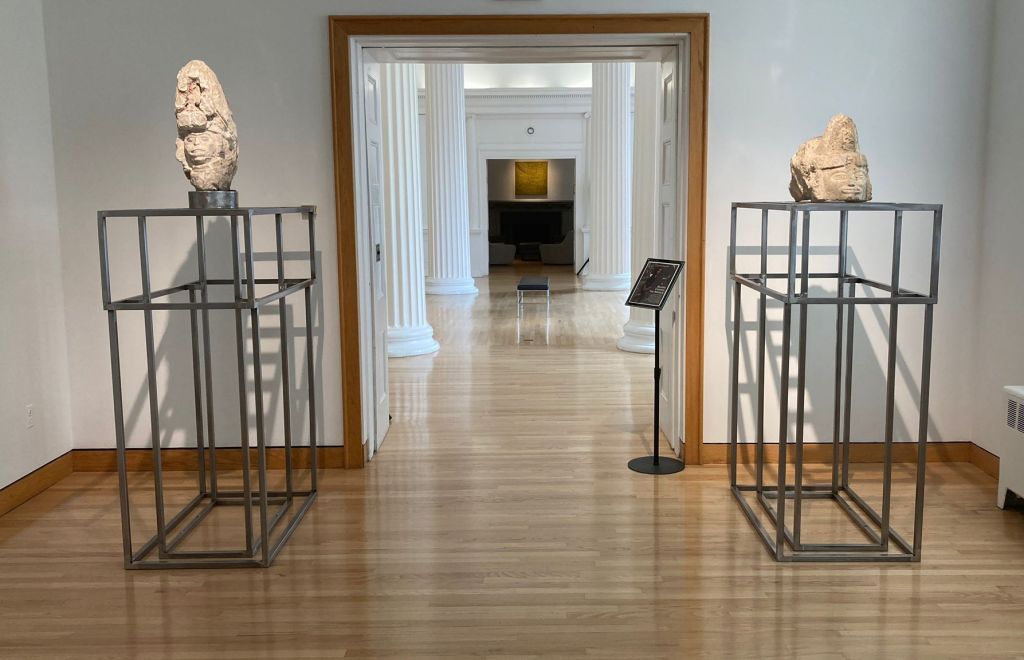
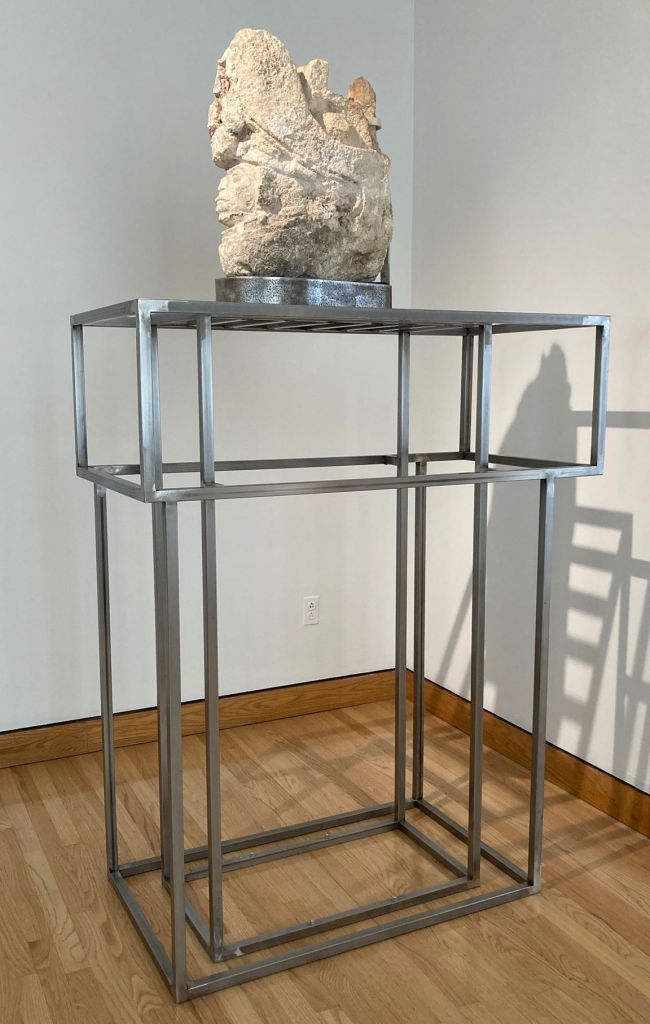
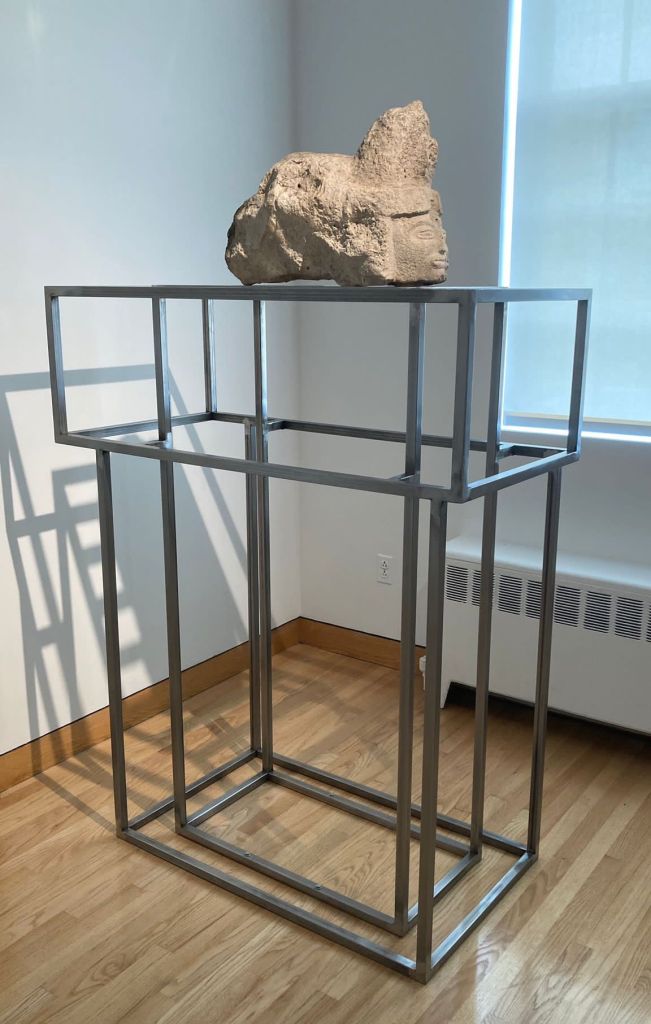
Williams College Museum of Art
May 26, 2023 – May 12, 2024
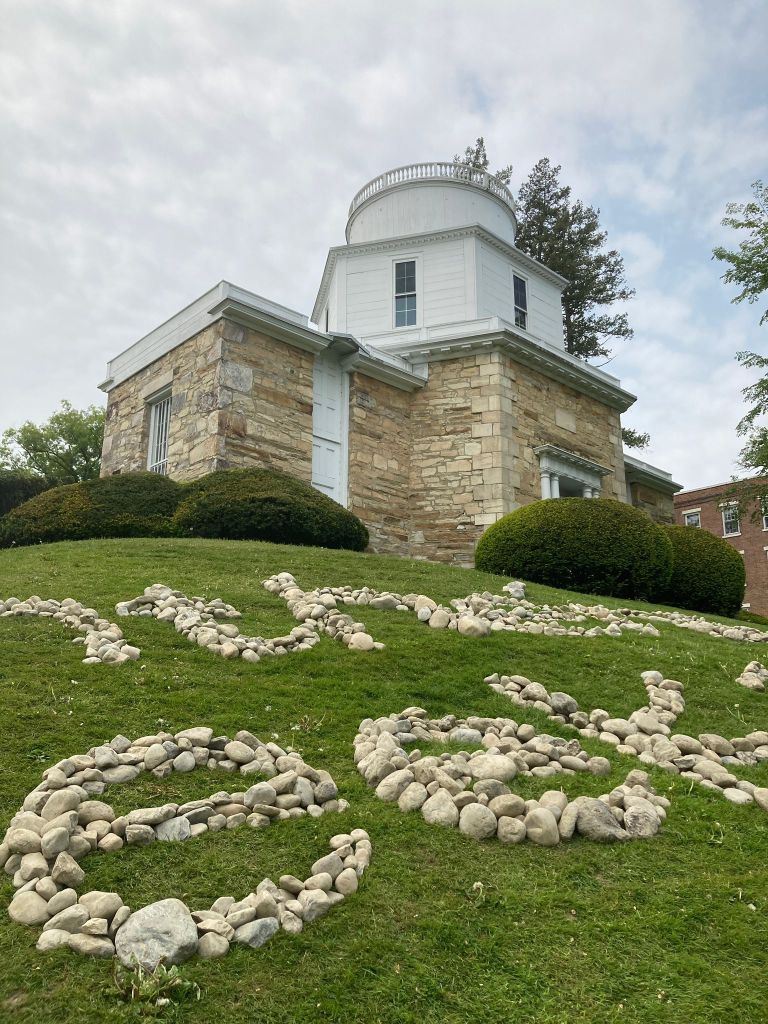
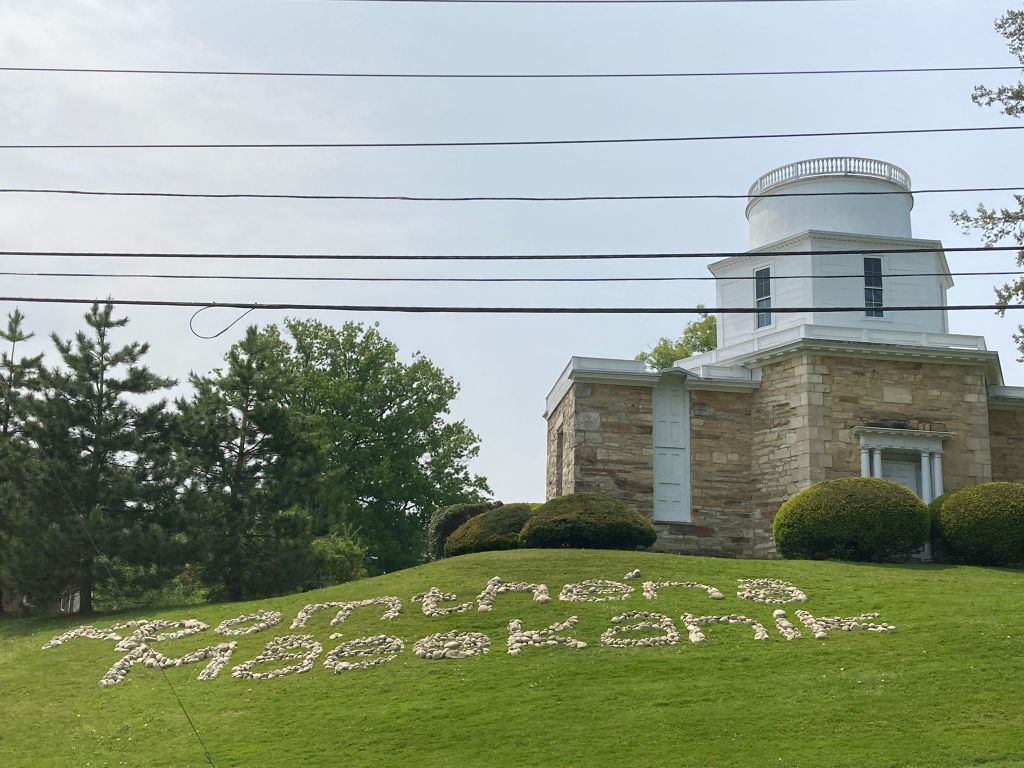
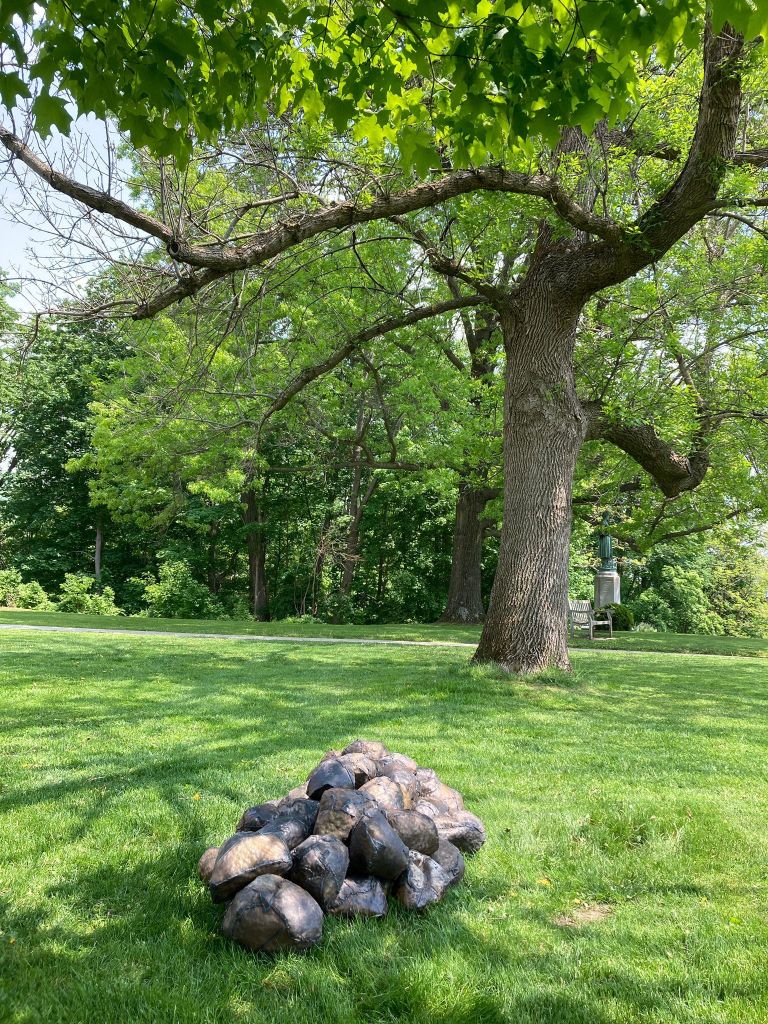
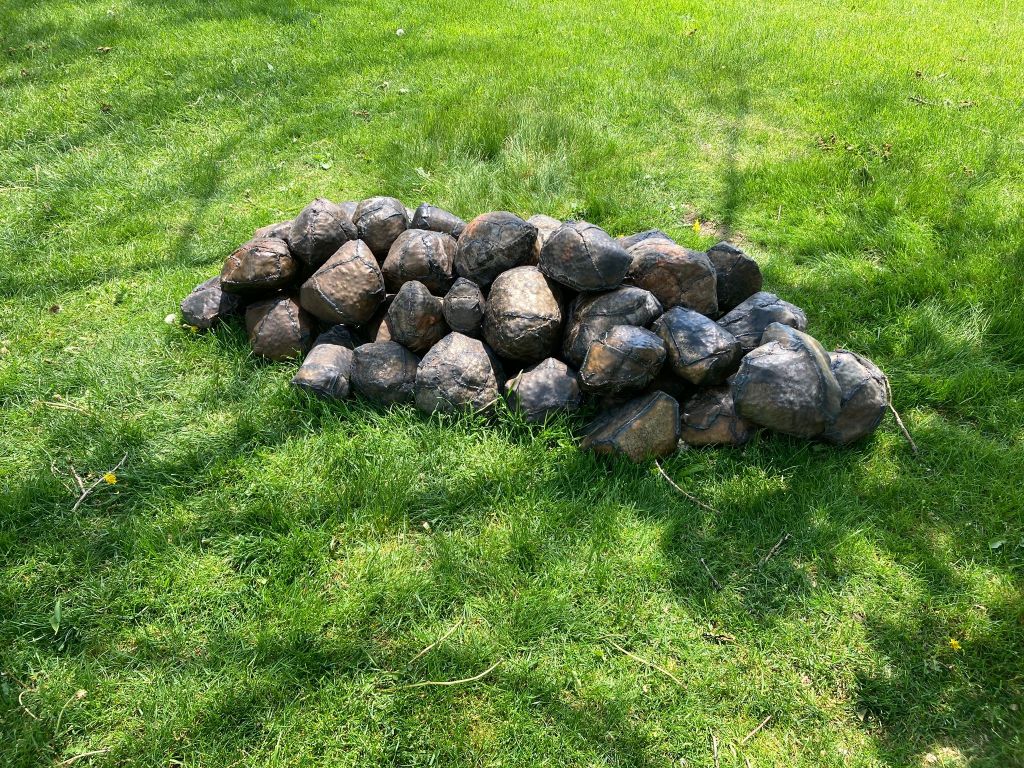
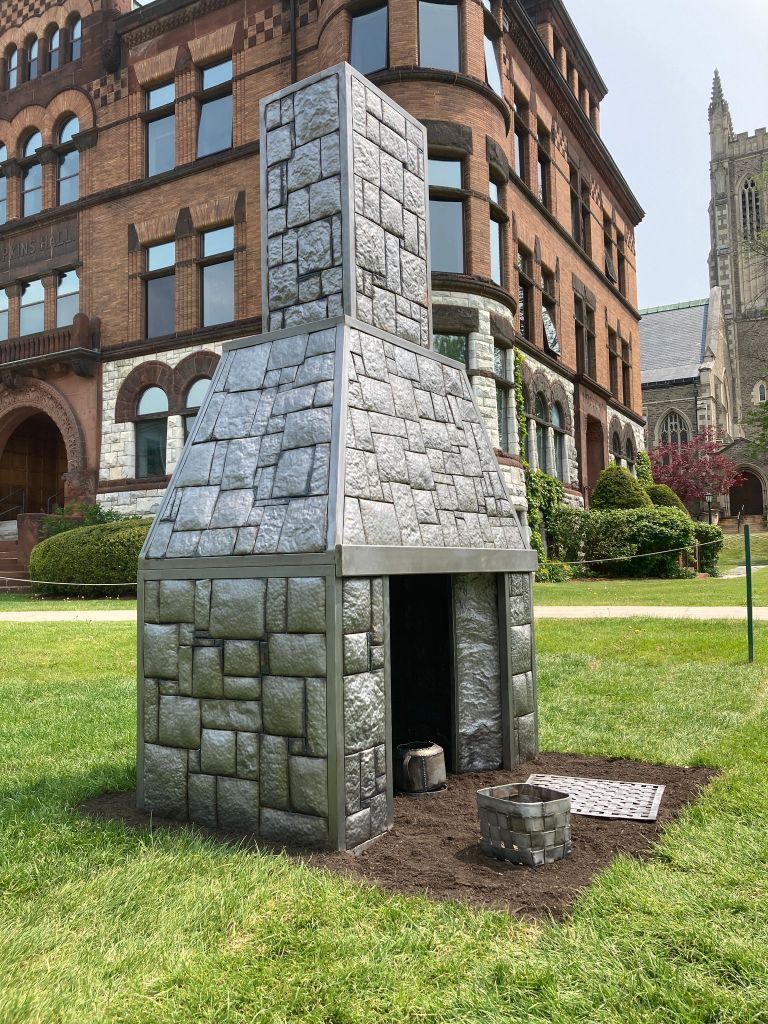
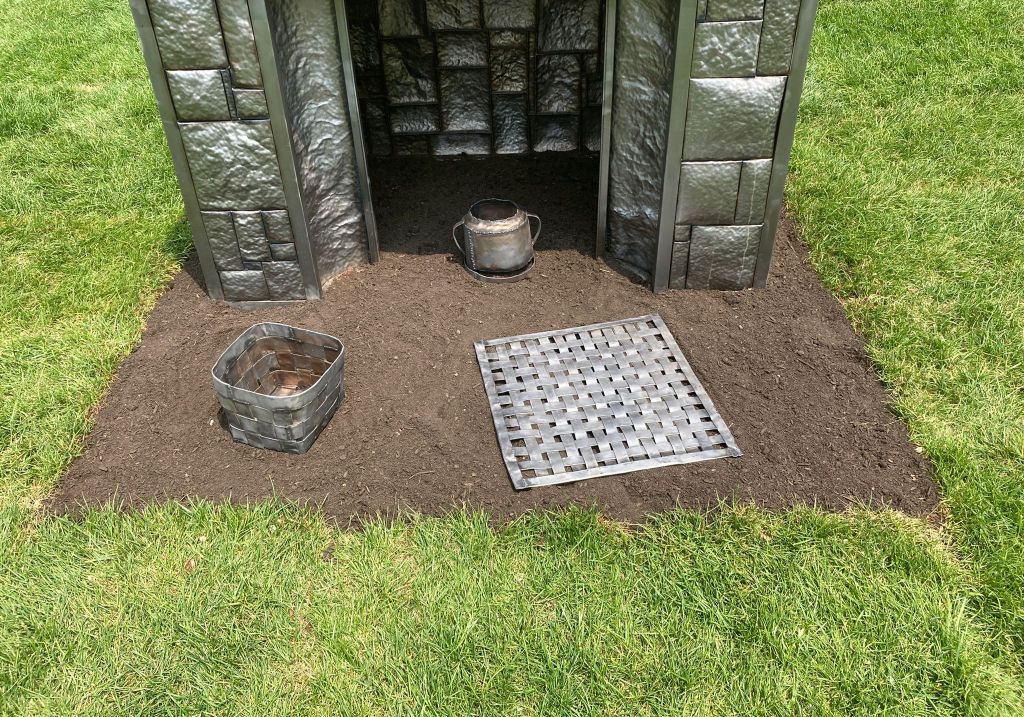
The Portals, an exhibition in multiple locations at Williams College by artist Beatriz Cortez, explores alternative genealogies of Williams College. The three outdoor components located on Main Street attend to omissions and erasures in the built environment of the campus. Here, in the Rotunda, the immersive sound installation interrogates the stories that we selectively tell, those we remember, and those we choose to forget. In the adjacent Stoddard gallery, the artist’s steel structures offer an embrace to two objects that came into WCMA’s collection against their will.
Stitching together different voices that inhabited the landscape, the installations invite viewers to coexist with various people who have believed in equality, justice, curiosity, diversity, and freedom in the area where Williamstown was created, and also to imagine the cyclical dimension of these struggles that seem to repeat themselves in a nation plagued by inequality.
The Portals was curated by Lisa Dorin, Deputy Director of Curatorial Engagement at Williams College Museum of Art.
Photos by Phillip Byrne.
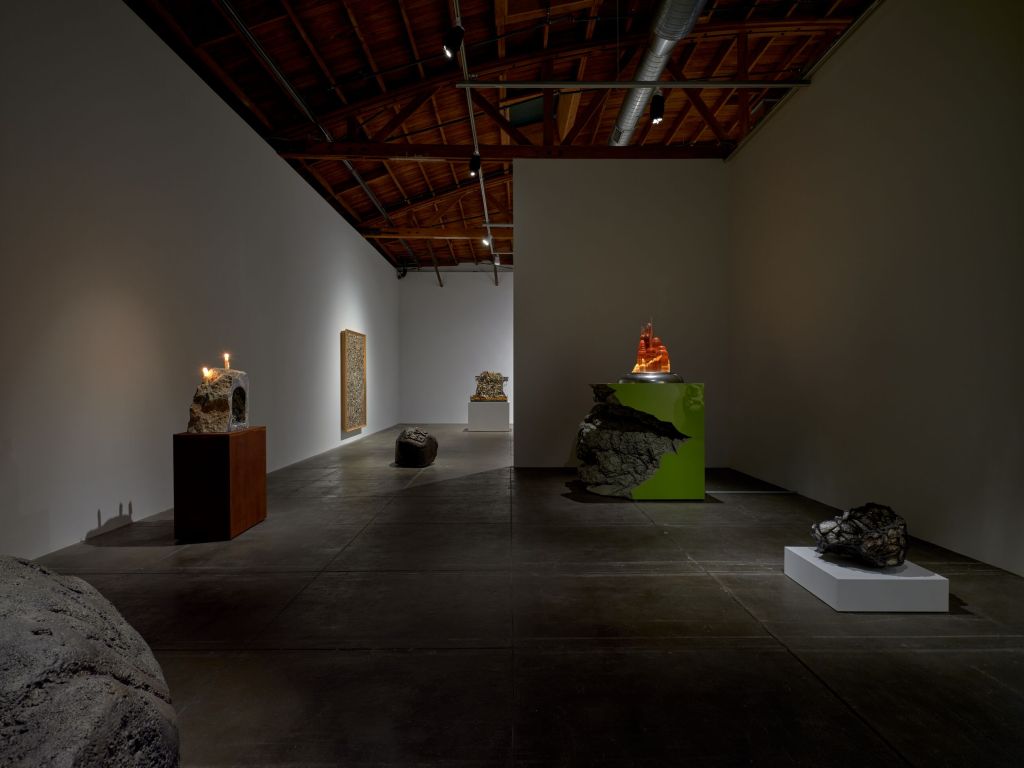
Hauser and Wirth, Los Angeles
September 15, 2023 – January 14, 2024
Curated by Jay Ezra Nayssan, ‘Nonmemory’ brings together seminal works by Mike Kelley and a group of seven contemporary artists – Kelly Akashi, Meriem Bennani, Beatriz Cortez, Raúl de Nieves, Olivia Erlanger, Lauren Halsey and Max Hooper Schneider – whose works all play with the role of memory as it posits our perceptions of space and place.
Alongside a number of Mike Kelley works related to ‘Educational Complex,’ Meriem Bennani and Olivia Erlanger’s pieces continue Kelley’s assessment of institutional and domestic space on identity formation, highlighting how the subject not only develops in, but is developed through space. Through her particular use of documentary and animation, Moroccan–born artist Meriem Bennani’s work in the exhibition deals with the legacy of colonialism in Morocco and its effects on the identities of students educated in the French lycée system, herself included. Culling from a range of suburban visual lexicon and architectural vernacular, Olivia Erlanger’s pieces investigate the mythology behind American social mobility and its fraught relationship to gender and class.
Artists Raúl de Nieves and Max Hooper Schneider both amass large amounts of personal and found objects in their works, which are reminiscent of Kelley’s lavish collection of keepsakes that saturate his Memory Ware Flats series. De Nieves is a Mexican-born artist whose ‘psycho-topographical’ pieces cull from memories of his migration from Michoacán to the United States. Deploying sublimity, nostalgia and tropes of the natural to different ends, Hooper Schneider’s excessive accumulation and subsequent degradation of everyday objects renders conventional forms and habitats strange, unfamiliar and constantly in flux.
Similar to Mike Kelley’s Kandors, Kelly Akashi and Beatriz Cortez engage with natural and counter architectural forms as a way of challenging our perceptions of space and time. El Salvador–born, Los Angeles–based artist Beatriz Cortez’s multimedia amalgamations of distant pasts and futures create new historical and spiritual multiplicities in the present. Kelly Akashi, also Los Angeles based, uses the lens of geology as a psychological metaphor for expansive time and space.
Photo: Hauser and Wirth.
Glacial Erratic
ICA San Diego, North Campus
Dates: Permanent exhibition.
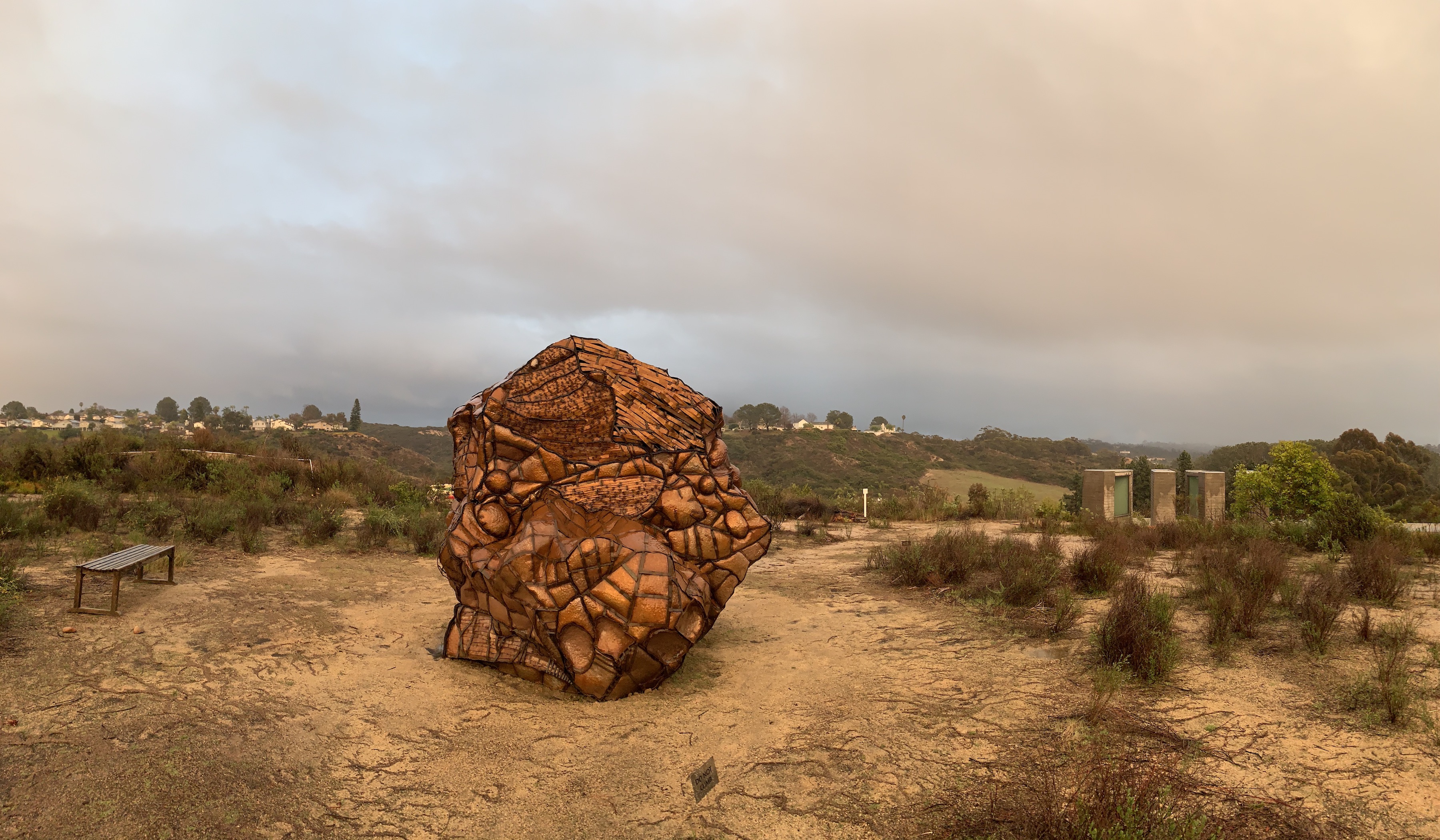
Beatriz Cortez, Glacial Erratic, 2020. Commissioned by the Frieze LIFEWTR Sculpture Prize. Steel. Courtesy of the artist and Commonwealth and Council. Photo: ICA San Diego.
Beatriz Cortez was awarded the inaugural Frieze LIFEWTR Sculpture Prize in 2019. Her proposal was selected by a jury chaired by Brooke Kamin Rapaport (Deputy Director and Martin Friedman Chief Curator, Madison Square Park Conservancy), and guest judges Taylor Aldridge, Brett Littman, Loring Randolph, and Michaella Solar-March. Made of steel frame and sheet metal, Glacial Erratic evokes an ancient boulder, like the numerous glacial erratics that populate the landscape in New York City. During the last Ice Age, the melting ice opened grooves on the Manhattan bedrock and deposited numerous glacial erratics all over the landscape. These large masses of rock differ in mineral content, in look, in size, and shape, from the native rocks in the local landscape. Visible all over the city, in Central Park, Prospect Park, Battle Hill, the Bronx, among many other sites all over the City, the matter that forms these rocks documents their migration before the human era, as well as the moment in which they emerged from the ice cap cover. As they were exposed to the light and to cosmic rays, the erratics were also touched by radiation, generating a process that documents their migration and the passing of time. Placed in the context of Rockefeller Center, the sculpture ages as it is exposed to the elements and human traffic while marking different temporalities and making visible the planetary nature of ancient migration.
 BEATRIZ CORTEZ